the science of interstellar pdf
- Published
- in PDF
The Science of Interstellar Travel: A Deep Dive into Theoretical Possibilities
Recent research, including Dr. Hale’s work, suggests atomic clocks maintain remarkable accuracy—losing only one second over extensive periods, vital for interstellar navigation.
The dream of reaching distant stars has captivated humanity for generations, fueled by scientific curiosity and the potential for discovery. However, interstellar travel presents monumental challenges, extending far beyond simply building faster spacecraft. Maintaining atomic clock precision—losing just one second over vast timescales—is crucial for accurate navigation.
These journeys demand solutions to problems of immense scale: propulsion, radiation shielding, sustaining life for centuries, and navigating the complexities of interstellar space. The allure remains strong, driving ongoing research into theoretical possibilities and pushing the boundaries of our technological capabilities.
Understanding the Vastness of Interstellar Distances
Grasping the sheer scale of interstellar distances is fundamental to appreciating the challenges of travel. Light-years, measuring the distance light travels in a year, and astronomical units, based on Earth’s orbit, define this immensity. Accurate timekeeping, like the atomic clocks maintaining one-second loss over extended periods, becomes paramount for navigation across these voids.

These distances highlight the limitations of current technology and emphasize the need for revolutionary propulsion systems to even contemplate reaching nearby stars within a human lifetime. The vastness also fuels questions about our place in the universe.
Light-Years and Astronomical Units: Defining the Scale
To comprehend interstellar distances, we utilize light-years – the distance light travels annually – and astronomical units (AU), based on Earth’s orbit around the Sun. A light-year equates to roughly 5.88 trillion miles, while one AU is about 93 million miles.
These units are crucial because interstellar journeys necessitate incredibly precise calculations, aided by technologies like atomic clocks, which demonstrate minimal time drift over vast durations, ensuring navigational accuracy.
The Fermi Paradox: Where is Everybody?
The Fermi Paradox questions the apparent contradiction between the high probability of extraterrestrial civilizations and the lack of contact. Given the universe’s age and size, numerous intelligent species should have arisen, yet we observe no definitive evidence.
This paradox fuels speculation about potential barriers to interstellar travel, perhaps related to the extreme distances and time scales involved, or unknown technological hurdles impacting long-duration spaceflight and communication.

Propulsion Systems: Overcoming the Speed Limit
Achieving interstellar travel necessitates propulsion systems far exceeding conventional capabilities. Current technologies, like chemical rockets, are fundamentally limited by exhaust velocity and propellant mass. Innovative approaches are crucial, exploring nuclear fission/fusion, ion propulsion offering high efficiency but low thrust, and even the controversial Project Orion utilizing nuclear pulse detonation.
Beamed energy systems, such as laser or microwave sails, present another avenue, potentially achieving significant velocities with external power sources.
Chemical Rockets: Limitations for Interstellar Travel
Traditional chemical rockets, while reliable for in-system maneuvers, face insurmountable hurdles for interstellar journeys. Their exhaust velocities are a tiny fraction of light speed, demanding enormous propellant quantities. The rocket equation dictates exponentially increasing propellant needs with desired velocity, rendering interstellar missions impractical.
Even optimizing propellant efficiency and staging offers insufficient gains to reach even nearby stars within a human lifespan, highlighting the need for revolutionary propulsion concepts.
Nuclear Propulsion: Fission and Fusion Rockets
Nuclear propulsion offers significantly higher exhaust velocities than chemical rockets, potentially enabling interstellar travel. Fission rockets utilize nuclear fission to heat propellant, achieving higher thrust and efficiency. Fusion rockets, harnessing the power of nuclear fusion, promise even greater performance, though technological challenges remain substantial.
Both concepts require robust shielding to protect the crew and environment from radiation, presenting a major engineering obstacle for practical interstellar application.
Ion Propulsion: Efficiency and Low Thrust
Ion propulsion systems excel in fuel efficiency, utilizing electric fields to accelerate ions, creating a gentle but persistent thrust. While offering extremely high specific impulse, the resulting thrust levels are comparatively low, necessitating long acceleration times for interstellar velocities.
This makes ion drives ideal for long-duration missions where continuous, albeit slow, acceleration is feasible, potentially reaching significant fractions of light speed over decades.
Project Orion: Nuclear Pulse Propulsion – A Controversial Concept
Project Orion, conceived in the 1950s, proposed propelling spacecraft via controlled nuclear explosions ejected from the rear. This audacious design promised immense thrust and high specific impulse, potentially enabling interstellar travel within a human lifetime. However, the concept faced significant hurdles.
Concerns regarding nuclear fallout from atmospheric testing and treaty limitations ultimately led to its abandonment, despite its theoretical potential for rapid interstellar journeys.
Beamed Energy Propulsion: Laser and Microwave Sails
Beamed energy propulsion offers a potentially cleaner alternative to traditional rockets, utilizing powerful lasers or microwaves focused on lightweight sails attached to spacecraft. This external energy source eliminates the need to carry propellant, drastically reducing spacecraft mass and enabling higher velocities.
Challenges include building and maintaining massive, precisely aimed beam emitters and efficiently transferring momentum to the sail across interstellar distances, but research continues.
Warp Drive Theory: Bending Spacetime
Warp drive, a concept popularized by science fiction, proposes circumventing the light-speed barrier by locally warping spacetime, contracting space in front of a spacecraft and expanding it behind. This creates a “bubble” allowing faster-than-light travel without technically exceeding light speed within the bubble.
The Alcubierre drive is the most prominent theoretical framework, but faces immense hurdles, primarily the requirement for exotic matter with negative mass-energy density.
Alcubierre Drive: The Theoretical Framework
Miguel Alcubierre’s 1994 proposal details a spacetime geometry allowing superluminal travel. It involves contracting spacetime before a spacecraft and expanding it afterward, creating a “warp bubble.” Crucially, the spacecraft itself remains stationary within the bubble, avoiding relativity violations.
The mathematics are sound, but the practical requirements are astronomical, demanding vast amounts of energy and, critically, exotic matter possessing negative mass-energy density – a substance not yet observed.
Negative Energy Density: The Major Hurdle
The Alcubierre drive’s primary obstacle is the requirement for negative energy density, a concept challenging our current understanding of physics. Unlike negative energy (like the potential energy of a raised weight), negative energy density implies a region of spacetime with less energy than empty space.
Creating and sustaining such a density requires exotic matter, whose existence remains purely theoretical. Even minuscule amounts would necessitate energies comparable to the mass-energy of a planet or even a star, rendering the concept currently impractical.
Current Research and Potential Breakthroughs
Despite the immense challenges, research into warp drive theory continues, focusing on minimizing the negative energy requirements. Recent theoretical work explores modified Alcubierre metrics, aiming for configurations needing less exotic matter or potentially utilizing known physics in novel ways.
Researchers are also investigating the Casimir effect, a quantum phenomenon producing a small negative energy density, as a potential, albeit limited, source. Progress in quantum gravity may offer insights, but breakthroughs remain distant.
Time Dilation and Relativity: The Traveler’s Perspective
Interstellar travel necessitates grappling with the profound implications of Einstein’s theories of relativity. Special relativity dictates time slows for objects approaching light speed, meaning travelers age less than those remaining on Earth. General relativity introduces gravitational time dilation, where time passes slower in stronger gravitational fields.
These effects are crucial for mission planning, impacting crewed mission durations and return synchronization. Accurate atomic clocks are vital for measuring these subtle temporal shifts during prolonged voyages.
Special Relativity and Time Slowing
As an object’s velocity nears the speed of light, time dilation becomes significant, a core tenet of special relativity. For interstellar travelers, this means time passes slower relative to a stationary observer on Earth. The faster the spacecraft, the more pronounced this effect becomes.
This isn’t merely a theoretical concept; atomic clocks demonstrate its reality, losing minimal time even during extended operation. Understanding time slowing is paramount for calculating journey durations and crew aging during interstellar missions.
General Relativity and Gravitational Time Dilation
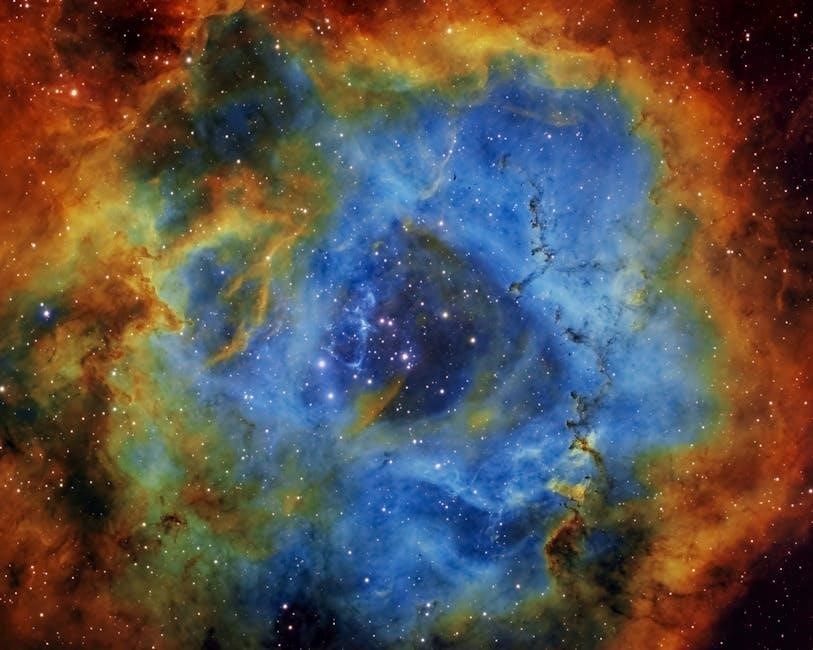
General relativity introduces another layer of time dilation: gravitational time dilation. Stronger gravitational fields cause time to slow down. Interstellar travel near massive objects, like black holes or neutron stars (though unlikely for direct travel), would experience this effect.
Even subtle gravitational differences between a spacecraft’s location and Earth will cause minor time discrepancies. Combined with special relativity, these effects necessitate precise calculations for interstellar mission planning and maintaining accurate timekeeping, as demonstrated by atomic clock precision.
Implications for Interstellar Crewed Missions
For interstellar crews, time dilation presents profound implications. A journey at relativistic speeds means time passes slower for the travelers compared to those on Earth. Returning astronauts would find Earth significantly further into the future than their experienced time.
This disparity necessitates careful consideration of mission duration, crew aging, and societal changes upon return. Maintaining accurate timekeeping, as highlighted by atomic clock stability, is crucial for communication and coordinating with Earth-based support throughout the voyage.

The Challenges of Interstellar Navigation
Interstellar navigation demands unprecedented precision. Traditional celestial methods become unreliable across vast distances, requiring innovative approaches. Accurate timekeeping, supported by stable atomic clocks losing minimal time, is paramount for calculating position and trajectory.
The interstellar medium—dust and gas— poses a significant obstacle, potentially disrupting sensors and altering course. Maintaining course correction over decades or centuries necessitates robust autonomous systems and reliable propulsion for subtle, yet crucial, adjustments.
Celestial Navigation at Interstellar Scales
Traditional star charts prove inadequate for interstellar distances, as stellar parallax shifts become minimal and recognizable patterns dissolve. Navigating relies on identifying distant quasars or pulsars as fixed reference points, demanding extremely sensitive instruments.
Precise timekeeping, with atomic clocks maintaining accuracy even after extended voyages, is crucial for calculating positions based on the arrival times of signals from these cosmic beacons. This requires complex algorithms to account for relativistic effects.
Dealing with Interstellar Medium and Dust
The interstellar medium, a sparse collection of gas and dust, presents significant challenges. Even low-density material, impacting a spacecraft at relativistic speeds, becomes a hazard akin to high-energy particle bombardment. Dust grains can erode spacecraft surfaces and disrupt sensitive instruments.
Shielding is paramount, potentially utilizing magnetic fields to deflect charged particles or employing robust physical barriers. Accurate mapping of interstellar dust concentrations is vital for trajectory planning, minimizing collision risks during prolonged voyages.
Maintaining Course Correction Over Decades/Centuries
Interstellar voyages demand extraordinarily precise course correction, spanning decades or even centuries. Minute deviations accumulate, leading to substantial errors over vast distances. Traditional methods relying on distant stars face challenges due to stellar drift and parallax issues.
Advanced autonomous navigation systems, utilizing onboard sensors and sophisticated algorithms, are crucial. Regular, subtle adjustments, potentially leveraging gravitational assists from interstellar objects, will be essential for staying on target.
Radiation Shielding: Protecting Travelers from Cosmic Rays
Interstellar space harbors intense radiation, posing a severe threat to crewed missions. Galactic cosmic rays (GCRs) and solar particle events (SPEs) can inflict significant biological damage, increasing cancer risk and impacting the central nervous system. Effective shielding is paramount, but presents a considerable engineering challenge.
Materials like polyethylene and water show promise, but require substantial mass. Magnetic fields offer a potential alternative, deflecting charged particles, though generating such fields is energy-intensive.
Types of Interstellar Radiation
Interstellar radiation encompasses several dangerous forms. Galactic Cosmic Rays (GCRs), originating from outside our solar system, are high-energy particles – protons, helium nuclei, and heavier ions – constantly bombarding space. Solar Particle Events (SPEs), bursts of radiation from the sun, are less frequent but can be incredibly intense.
Additionally, there’s secondary radiation created when primary particles interact with spacecraft materials. These particles pose significant health risks to astronauts during prolonged interstellar voyages.
Shielding Materials and Techniques
Effective radiation shielding is crucial for interstellar travel. Polyethylene, rich in hydrogen, is a promising material for slowing down neutrons. Water, readily available and effective, can also serve as shielding, though its mass is a concern. Aluminum provides some protection against charged particles.
Magnetic fields offer a potential, though complex, shielding method, deflecting charged particles. Layered shielding, combining different materials, maximizes protection against the broad spectrum of interstellar radiation.
Biological Effects of Long-Term Radiation Exposure
Prolonged exposure to cosmic radiation poses significant health risks. Increased cancer rates are a primary concern, alongside damage to the central nervous system, potentially leading to cognitive impairment. Cataracts and cardiovascular disease are also heightened risks.

Genetic mutations could impact future generations. Mitigation strategies, like shielding and pharmaceutical interventions, are vital, but complete protection remains a substantial challenge for interstellar crews.
Sustaining Life on Interstellar Voyages
Long-duration interstellar travel demands completely self-sufficient life support systems. Closed-loop systems will recycle air, water, and waste, minimizing resource depletion; In-space food production, utilizing hydroponics or aeroponics, is crucial for nutritional needs and psychological well-being.
Addressing the psychological challenges of isolation and confinement is paramount, requiring careful crew selection and robust mental health support protocols throughout the voyage.
Closed-Loop Life Support Systems
These systems aim for near-total resource regeneration, crucial for decades-long voyages. Water recovery from humidity and waste is essential, alongside air revitalization removing carbon dioxide and replenishing oxygen. Waste processing transforms organic matter into usable resources, like fertilizer for food production.
Reliability and redundancy are paramount; multiple, independent loops ensure survival even with component failures, minimizing reliance on Earth resupply.
Food Production in Space
Sustaining interstellar crews necessitates onboard food generation, moving beyond pre-packaged supplies. Hydroponics and aeroponics offer efficient, soil-less cultivation of vegetables and fruits, maximizing space and minimizing water usage. Insect farming presents a protein-rich, sustainable food source with a small footprint.
Algae bioreactors can produce both food and oxygen, further enhancing self-sufficiency, while addressing nutritional needs during prolonged missions.
Psychological Challenges of Long-Duration Spaceflight
Extended interstellar voyages pose significant psychological hurdles for crews. Isolation, confinement, and the lack of Earth’s sensory input can induce depression, anxiety, and interpersonal conflicts. Maintaining crew morale requires robust psychological support, including virtual reality environments simulating Earth and regular communication—despite delays.
Careful crew selection, emphasizing emotional stability and compatibility, is crucial for mission success and well-being.
The Search for Habitable Exoplanets
Identifying potential destinations is paramount for interstellar travel. Current methods—transit, radial velocity, and direct imaging—reveal exoplanets, but confirming habitability remains complex. Habitable zones, regions around stars permitting liquid water, are key indicators, though atmospheric composition is vital.
Ongoing research focuses on analyzing exoplanet atmospheres for biosignatures, hinting at possible life, guiding future interstellar exploration efforts.
Exoplanet Detection Methods (Transit, Radial Velocity, Direct Imaging)
Several techniques aid in discovering distant worlds. The transit method observes dips in starlight as planets pass before their star, while radial velocity measures stellar wobble caused by orbiting planets. Direct imaging, though challenging, captures faint planetary light.
Each method has limitations, requiring combined approaches for comprehensive exoplanet surveys and characterization, crucial for interstellar mission planning.
Habitable Zones and the Potential for Life
The habitable zone—often called the “Goldilocks zone”—represents the orbital region around a star where liquid water could exist on a planet’s surface. This is considered essential for life as we know it.
However, habitability is complex, influenced by atmospheric composition, planetary mass, and stellar activity. Identifying planets within these zones fuels the search for extraterrestrial life, driving interstellar exploration goals.
Current Exoplanet Candidates for Interstellar Exploration
Currently, no exoplanet is within reach for near-future interstellar missions due to immense distances; However, Proxima Centauri b, orbiting our nearest stellar neighbor, remains a prime candidate for study.
Other intriguing possibilities include planets around Tau Ceti and Epsilon Eridani, though confirmation and detailed characterization are ongoing. Future advancements in propulsion are crucial to realistically target these distant worlds.