
pdf don quixote
- Published
- in PDF
Don Quixote PDF: A Comprehensive Guide

Don Quixote in PDF format offers accessible exploration of Cervantes’ masterpiece‚ frequently sourced from digitized libraries like Google Books․
These versions‚ including the 1907 Oxford University Press edition‚ preserve historical context and facilitate scholarly study․
Historical Context of Don Quixote
Don Quixote emerged during Spain’s Golden Age (Siglo de Oro)‚ a period of immense artistic and literary flourishing‚ yet also marked by socio-political decline․ Published in 1605 and 1615‚ the novel reflects a Spain grappling with fading imperial power‚ economic hardship‚ and religious tensions following the Reconquista․ Cervantes keenly observed the societal shifts occurring as the age of chivalry waned‚ replaced by a more pragmatic‚ mercantile worldview․
The popularity of chivalric romances – tales of knights‚ quests‚ and courtly love – provided the immediate literary backdrop․ These romances‚ while entertaining‚ were increasingly seen as unrealistic and outdated․ Cervantes satirizes this genre through Don Quixote‚ whose delusions are fueled by excessive reading of such tales․ The novel’s setting‚ La Mancha‚ a relatively unremarkable region of Spain‚ further underscores the contrast between Quixote’s fantastical aspirations and the mundane reality surrounding him․
Understanding this historical context is crucial when exploring PDF versions of the text‚ as annotations and scholarly introductions often highlight these connections․ Digitized editions‚ like those available through Google Books‚ allow modern readers to engage with the novel within its original cultural framework․
Miguel de Cervantes: Author Biography
Don Miguel de Cervantes y Saavedra (1547-1616) was a Spanish novelist‚ poet‚ and playwright‚ widely regarded as one of the most important figures in Spanish literature․ His life was marked by both literary ambition and considerable hardship․ He served as a soldier‚ participating in the Battle of Lepanto in 1571‚ where he sustained injuries that left him with a permanently disabled hand – earning him the nickname “el manco de Lepanto” (the one-handed man of Lepanto)․
Cervantes endured periods of captivity in Algiers‚ held for ransom for five years‚ before finally returning to Spain․ Despite his literary aspirations‚ he faced financial difficulties throughout his life‚ working various jobs to support himself and his family․ He experienced limited recognition during his lifetime‚ yet persevered in his writing․
His masterpiece‚ Don Quixote‚ published in two parts‚ cemented his legacy․ Accessing PDF versions of his works allows modern readers to delve into the mind of this complex author‚ often accompanied by biographical notes that illuminate the connection between his life experiences and his literary creations․
The Publication History of Don Quixote (1605 & 1615)
Don Quixote’s publication unfolded in two distinct parts‚ reflecting Cervantes’ evolving vision and responding to public reception․ The first part‚ published in 1605‚ quickly gained popularity‚ captivating readers with its innovative narrative and satirical portrayal of chivalric romances․ However‚ Cervantes faced challenges with unauthorized sequels and continuations appearing shortly after․
To address these‚ and to further develop his characters and themes‚ Cervantes published the second part in 1615․ This installment directly engages with the spurious sequel‚ demonstrating Cervantes’ literary control and deepening the novel’s meta-narrative complexity․ The second part is often considered superior‚ showcasing a more refined style and profound exploration of illusion versus reality․
Modern PDF editions frequently present both parts as a unified work‚ allowing readers to experience the complete narrative arc․ Digitized versions preserve these historical publication details‚ often including prefaces and notes contextualizing the novel’s reception and impact․
Availability of Don Quixote in PDF Format
Don Quixote is remarkably accessible in PDF format‚ thanks to extensive digitization efforts by libraries and institutions worldwide․ This widespread availability allows readers to engage with Cervantes’ masterpiece across various devices and platforms‚ fostering continued scholarly interest and public enjoyment․

Numerous online repositories offer free PDF downloads‚ ranging from complete translations to digitized versions of historical editions․ These resources cater to diverse needs‚ whether for casual reading‚ academic research‚ or comparative textual analysis․ The ease of access has significantly broadened the novel’s readership‚ transcending geographical and economic barriers․
Furthermore‚ many PDF versions include features like searchable text‚ adjustable font sizes‚ and interactive tables of contents‚ enhancing the reading experience․ The preservation of older translations‚ like Charles Jarvis’s‚ in PDF format provides valuable insights into the novel’s evolving reception and linguistic interpretations․
Popular PDF Sources for Don Quixote
Several online platforms consistently rank as popular sources for obtaining Don Quixote in PDF format․ Google Books provides a digitized version‚ a reproduction of a library book intended for preservation and accessibility‚ often featuring the Jarvis translation․ This version is easily searchable and downloadable‚ making it a convenient option for many readers․
The Oxford University Press Edition‚ published in 1907 and available through the Internet Archive‚ represents a significant historical edition․ Its high-resolution scan and detailed presentation appeal to scholars and those interested in the novel’s publishing history․ This edition‚ digitized in 2025‚ offers a glimpse into earlier translations and editorial choices․
Other sources include Project Gutenberg‚ though availability may vary‚ and various university library websites offering digitized copies for research purposes․ These platforms collectively ensure that Don Quixote remains readily available in PDF form‚ catering to a wide range of academic and recreational needs․
Google Books Digitized Version
The Google Books digitized version of Don Quixote stands as a readily accessible entry point for readers seeking a PDF copy of Cervantes’ classic․ This particular rendition is presented as a faithful reproduction of an original library book‚ meticulously digitized to ensure the preservation of its content and widespread accessibility․ The primary aim of this digitization project is to safeguard valuable literary works and make them available to a global audience․
Notably‚ this version frequently features the translation by Charles Jarvis‚ a translation commonly found in many PDF iterations of the novel․ It includes a comprehensive table of contents‚ allowing readers to navigate the extensive chapters with ease․ The digitized format enables full-text searching‚ facilitating research and the quick location of specific passages․
Users can typically download the PDF directly from Google Books or view it online through their browser․ This makes it a convenient and cost-effective option for students‚ researchers‚ and casual readers alike‚ offering a reliable source for experiencing Don Quixote․
Oxford University Press Edition (1907)
The Oxford University Press edition of Don Quixote‚ published in 1907‚ represents a significant historical offering available in PDF format․ Digitized and preserved through platforms like the Internet Archive‚ this edition provides a glimpse into early 20th-century scholarship and translation approaches to Cervantes’ masterpiece․ Its substantial size – approximately 1․1GB – reflects the comprehensive nature of the text and accompanying materials․
This edition is valued for its meticulous presentation and scholarly apparatus‚ offering a different reading experience compared to more modern translations․ The PDF version allows for detailed examination of the original formatting and typesetting choices of the time․ It’s a valuable resource for researchers interested in the textual history of Don Quixote․

Accessing this PDF through the Internet Archive allows users to download or view the complete work online‚ contributing to the ongoing preservation and accessibility of literary heritage․ It stands as a testament to the enduring appeal of Cervantes’ novel and the importance of historical editions․
Understanding the Narrative Structure
Don Quixote’s narrative structure is remarkably complex‚ evolving significantly between its two parts – published in 1605 and 1615․ The novel employs a framing device‚ presenting itself as a translation of an Arabic manuscript by Cide Hamete Benengeli‚ adding layers of metafiction and unreliable narration․ This technique allows Cervantes to comment on the nature of storytelling and truth itself․
The first part focuses on Don Quixote’s initial adventures‚ largely episodic and driven by his delusions․ The second part‚ however‚ demonstrates a more sophisticated structure‚ with characters aware of the first book’s publication and interacting with Quixote based on their prior knowledge․ This self-referentiality is a key element of the novel’s modernity․
PDF versions facilitate close reading and analysis of this structure‚ allowing readers to easily navigate between chapters and trace the development of themes and characters․ Studying the narrative through a PDF allows for detailed annotation and comparative analysis‚ enhancing comprehension of Cervantes’ innovative approach to storytelling․
Key Characters in Don Quixote

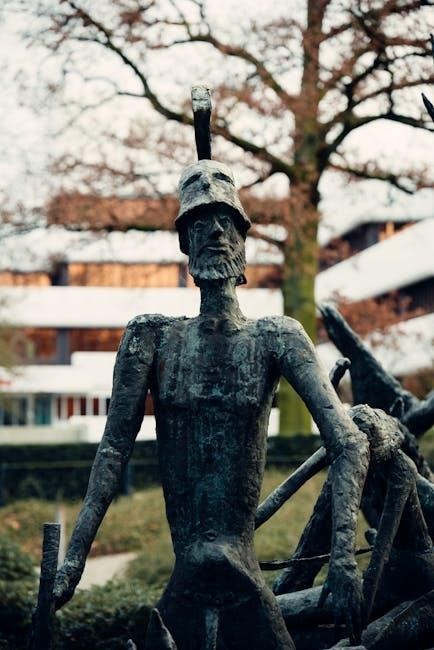
Don Quixote‚ originally Alonso Quijano‚ is the central figure‚ a man consumed by chivalric romances who embarks on a quest to revive knight-errantry․ His unwavering‚ though delusional‚ idealism drives the narrative․ Sancho Panza‚ his squire‚ provides a pragmatic counterpoint‚ grounded in reality and motivated by the promise of reward․
Dulcinea del Toboso‚ though largely imagined by Quixote‚ represents idealized beauty and serves as the object of his devotion․ Other significant characters include the curate and the barber‚ who attempt to bring Quixote back to his senses‚ and various innkeepers and travelers encountered during his journeys․

PDF versions of the novel allow for detailed character tracking and analysis․ Readers can easily search for instances of specific characters‚ noting their interactions and development throughout the story․ Annotating a PDF facilitates a deeper understanding of the complex relationships and motivations that drive the plot‚ enriching the reading experience․
Don Quixote’s Delusions and the Theme of Reality
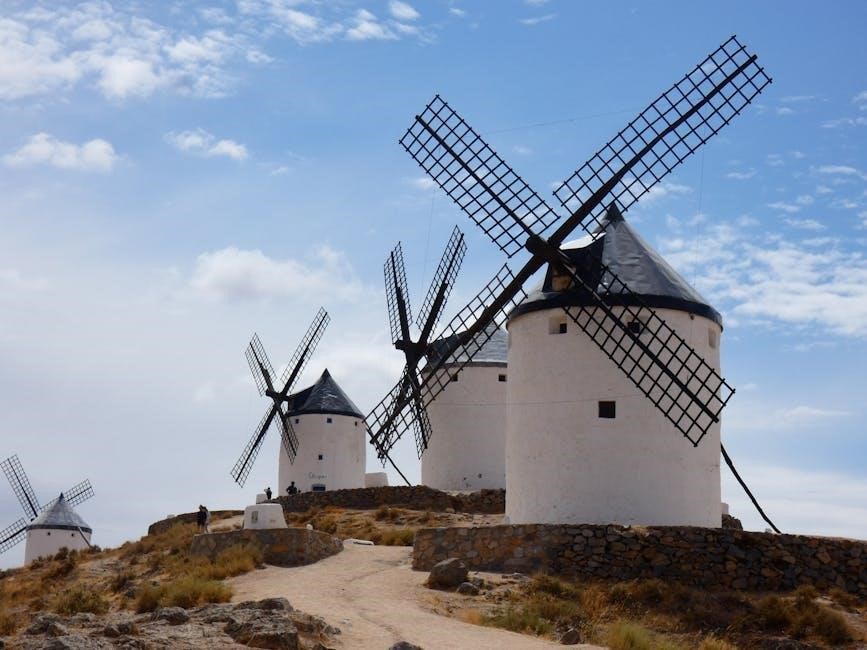
Don Quixote’s central conflict revolves around his distorted perception of reality‚ fueled by an obsessive reading of chivalric romances․ He consistently misinterprets ordinary events as grand adventures‚ transforming windmills into giants and inns into castles․ This delusion isn’t simply madness; it’s a commentary on the power of imagination and the subjective nature of truth․
The novel constantly juxtaposes Quixote’s fantastical world with the mundane reality experienced by Sancho Panza and other characters․ This contrast highlights the tension between illusion and perception‚ prompting readers to question what constitutes “reality․”
Accessing Don Quixote in PDF format allows for close textual analysis of these instances of delusion․ Readers can easily highlight and compare Quixote’s interpretations with the objective descriptions of events‚ deepening their understanding of this core thematic element․ Digital annotations further enhance this exploration․
Sancho Panza: A Foil to Don Quixote
Sancho Panza serves as a crucial foil to Don Quixote‚ embodying practicality‚ common sense‚ and a grounded connection to reality․ While Quixote is lost in a world of chivalric fantasies‚ Sancho remains focused on tangible concerns like food‚ comfort‚ and material gain․ This stark contrast provides comedic relief and a critical perspective on Quixote’s delusions․
Sancho’s loyalty to Quixote‚ despite recognizing his madness‚ is a testament to the complexities of their relationship․ He’s motivated by the promise of reward – a governorship – but also develops a genuine affection for the eccentric knight․

Studying Don Quixote in PDF format facilitates a comparative analysis of the two characters․ Readers can easily track their dialogue and actions‚ noting how Sancho’s down-to-earth observations consistently challenge Quixote’s idealistic interpretations․ Digital search functions allow quick access to specific interactions‚ enriching the understanding of their dynamic․
The Significance of Chivalric Romances
Chivalric romances profoundly influence Don Quixote‚ serving as the catalyst for his descent into madness and subsequent adventures․ These tales‚ popular in 16th and 17th-century Spain‚ depict idealized knights‚ heroic quests‚ and courtly love – a world Quixote desperately attempts to recreate․
Cervantes utilizes chivalric romances not to celebrate them‚ but to satirize their unrealistic conventions․ Don Quixote’s misinterpretations of reality stem directly from his immersion in these fantastical narratives․ He perceives windmills as giants and inns as castles‚ demonstrating the dangers of unchecked imagination․
Accessing Don Quixote in PDF format allows for convenient cross-referencing with contemporary chivalric texts․ Readers can compare Cervantes’ portrayal with the source material‚ appreciating the nuances of his satire․ Digital editions often include annotations and contextual information‚ further illuminating the significance of these literary influences and their impact on the novel’s themes․

Satire and Humor in Don Quixote
Don Quixote is renowned for its masterful use of satire and humor‚ targeting societal norms‚ literary conventions‚ and human folly․ Cervantes employs irony‚ parody‚ and slapstick comedy to critique the prevailing values of his time‚ particularly the fading ideals of chivalry․
The humor arises from the stark contrast between Don Quixote’s grandiose delusions and the mundane reality he encounters․ His misadventures‚ often resulting in physical mishaps and social embarrassment‚ are both amusing and poignant․ Sancho Panza’s pragmatic worldview provides a comedic foil to Quixote’s idealism․
Reading Don Quixote in PDF format facilitates a closer examination of Cervantes’ linguistic wit․ Digital editions allow for easy searching and annotation‚ enabling readers to dissect the layers of satire․ The accessibility of PDFs encourages repeated readings‚ revealing new comedic subtleties with each encounter‚ enhancing appreciation for Cervantes’ genius․
Don Quixote as a Founding Work of the Modern Novel
Don Quixote is widely considered the first modern novel‚ breaking from earlier romance traditions through its complex character development‚ realistic settings‚ and meta-narrative techniques․ Cervantes’ work pioneered the exploration of individual psychology and the subjective nature of reality‚ influencing generations of novelists․
The novel’s innovative structure‚ blending multiple storylines and perspectives‚ departed from the linear narratives of previous literature․ Don Quixote’s internal struggles and evolving perceptions foreshadowed the psychological depth found in later novels․ The use of a narrator who comments on the story itself was also groundbreaking․
Accessing Don Quixote in PDF format allows scholars and readers to study its structural innovations closely․ Digital editions facilitate comparative analysis with subsequent novels‚ tracing the lineage of modern narrative techniques․ The enduring influence of Cervantes’ masterpiece is readily apparent through these accessible PDF versions․
Translations of Don Quixote into English
Numerous English translations of Don Quixote exist‚ each offering a unique interpretation of Cervantes’ original Spanish text․ These translations vary in style‚ accuracy‚ and adherence to the nuances of 17th-century language․ Finding a suitable translation is crucial for appreciating the novel’s complexities․
Many PDF versions available online feature the translation by Charles Jarvis‚ a frequently digitized edition due to its historical significance and public domain status․ However‚ modern translations often prioritize readability and contemporary language‚ offering a more accessible experience for modern readers․
When exploring Don Quixote in PDF format‚ it’s essential to consider the translator’s approach․ Comparing different translations can reveal subtle differences in interpretation and enhance understanding of Cervantes’ artistry․ Digital access allows for easy side-by-side comparison of various English versions․
Charles Jarvis Translation (Frequently Found in PDFs)
The translation of Don Quixote by Charles Jarvis‚ originally published in 1612‚ remains remarkably prevalent in PDF formats available online․ Its enduring presence stems from its early completion and subsequent entry into the public domain‚ making it freely accessible for digitization and distribution․ Google Books‚ in particular‚ hosts a widely circulated digitized version based on Jarvis’s work․
While historically significant‚ Jarvis’s translation reflects the linguistic conventions of the 17th century‚ often appearing archaic to modern readers․ Its prose can be dense and its vocabulary unfamiliar‚ potentially hindering comprehension for those unaccustomed to older English styles․ However‚ scholars appreciate it for its closeness to the original Spanish text․
Despite its stylistic challenges‚ the Jarvis translation provides a valuable window into the novel’s early reception in the English-speaking world․ Its frequent appearance in PDFs makes it a convenient starting point for exploring Don Quixote‚ though supplementing it with a modern translation is often recommended․
Analyzing the Language and Style of Cervantes
Cervantes’ linguistic prowess in Don Quixote is a cornerstone of its literary merit‚ and PDF versions allow for detailed textual analysis․ He masterfully blends various styles – from the elevated language of chivalric romances‚ which Don Quixote emulates‚ to the colloquial speech of common folk‚ exemplified by Sancho Panza․ This contrast is crucial to the novel’s satirical effect․
Examining PDFs facilitates close reading of Cervantes’ innovative use of irony‚ humor‚ and realism․ His prose is characterized by complex sentence structures‚ rich vocabulary‚ and a keen ear for dialogue․ The interplay between direct and indirect discourse‚ and the frequent use of digressions‚ contribute to the novel’s dynamic narrative․
Digital formats enable searching for specific motifs‚ phrases‚ or stylistic devices‚ aiding researchers in uncovering the nuances of Cervantes’ writing․ Analyzing the language in PDFs reveals his deliberate crafting of character voices and his profound understanding of human communication․
The Enduring Legacy of Don Quixote
Don Quixote’s influence on literature is immeasurable‚ and readily accessible PDF versions ensure its continued relevance for generations․ Considered a foundational work of the modern novel‚ it pioneered narrative techniques like metafiction and psychological realism․ Its impact extends beyond literature‚ influencing art‚ music‚ and philosophy․
The novel’s themes – the nature of reality‚ the power of imagination‚ and the conflict between idealism and pragmatism – remain universally resonant․ PDF accessibility allows global audiences to engage with these timeless ideas․ The character of Don Quixote himself has become an archetype‚ representing both noble aspiration and delusional folly․
Digital preservation through PDFs safeguards Cervantes’ masterpiece against the ravages of time․ These formats facilitate scholarly study‚ inspire new interpretations‚ and ensure that Don Quixote continues to captivate and challenge readers worldwide‚ solidifying its place in the literary canon․
Using PDF Versions for Scholarly Study
PDF versions of Don Quixote are invaluable resources for academic research‚ offering convenient access to various editions and translations․ Digitized texts from sources like Google Books and the Oxford University Press (1907) provide researchers with readily available primary source material․ The searchability of PDFs allows for efficient keyword analysis‚ facilitating detailed examinations of themes‚ characters‚ and Cervantes’ stylistic choices․
Scholars can easily compare different translations‚ such as Charles Jarvis’ frequently found in PDFs‚ to analyze the nuances of language and interpretation․ The ability to copy and paste excerpts streamlines the process of textual analysis and quotation․ Furthermore‚ PDFs support annotation‚ enabling researchers to record their insights and build arguments directly within the text․
These digital formats promote collaborative scholarship‚ allowing for easy sharing of resources and annotations; PDFs ensure the preservation of textual integrity‚ providing a stable platform for rigorous academic inquiry into Cervantes’ enduring masterpiece․